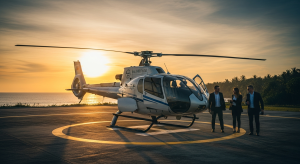
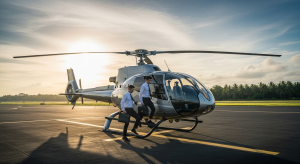
Helicopter Charter vs. Seaplane Tour in Bali: A Comparison
- Access: Helicopters can access clifftops, private villas, and volcanoes, while seaplanes are restricted to water landings.
- Perspective: Helicopters offer low-altitude, detailed views with hovering capabilities, ideal for photography. Seaplanes provide broader, sweeping views of the archipelago.
- Itinerary: Charters are highly bespoke, but helicopter itineraries allow for more granular, land-based customization.
The gentle rock of the fuselage against the calm waters of Benoa Harbour gives way to a surge of power. Below, the turquoise sea churns to white as the floats slice through the surface, and in a moment of pure exhilaration, water becomes air. Or perhaps, it begins differently. The thrum of the rotors vibrates through the cabin floor, a rhythmic pulse of anticipation. The ground simply falls away, revealing the intricate mix of a private Seminyak villa, then the sprawling coastline, all in a seamless, vertical ascent. This is the essential choice facing the discerning traveler in Bali: the romantic splash of the seaplane or the surgical precision of the helicopter. As an editor who has spent countless hours in both, I can tell you the decision is less about which is superior and more about what kind of story you wish to tell.
The Core Difference: Access and Itinerary Design
At its heart, the debate between a helicopter charter and a seaplane tour is a conversation about geography and intent. A helicopter is a master of topography; a seaplane is a master of archipelago. Think of the helicopter as the ultimate key, capable of unlocking nearly any location on the island with a suitable clearing. Our pilots at Helicopter Hire Bali frequently operate into private estates in Ubud or land on clifftops near Uluwatu Temple for proposals, requiring a clear zone of as little as 25×25 meters for an aircraft like the Airbus H130. This allows for an itinerary of surgical precision: a morning flight over the active caldera of Mount Batur, followed by a landing at a secluded beach for lunch, and an afternoon transfer directly to your villa’s helipad, bypassing all traffic. The aircraft’s ability to hover provides an unmatched platform for professional photographers and volcanologists alike, allowing for sustained, close-up observation of sites like the 1,031-meter-high peak of Mount Agung.
The seaplane, by contrast, paints with a broader brush. Its domain is the water, the vast network of blue that connects Bali to its neighboring islands. Operators like Air Bali utilize aircraft such as the Cessna Grand Caravan Amphibian, which requires a water runway of approximately 900 meters of calm sea. This makes it the most elegant and expedient way to journey from southern Bali to the Gili Islands or Nusa Lembongan. The experience is about the journey itself—the transition from land to sea to air. Your itinerary is coastal, an island-hopping adventure that avoids the crowded fast-boat terminals and lengthy ground transfers. While it cannot take you deep into the island’s interior jungles or to the rim of a volcano, it offers a direct portal to the marine wonders of the Lombok Strait, a feat a helicopter cannot replicate in the same manner. The choice, therefore, hinges on your destination: for inland cultural immersion and topographical exploration, the helicopter is peerless; for inter-island grace and coastal discovery, the seaplane is poetic.
The View from Above: A Tale of Two Altitudes
The perspective from the air is radically different depending on your chosen vessel. A helicopter tour is an intimate affair with the landscape. Flying at a typical altitude of 500 to 1,500 feet, you are low enough to discern the individual farmers working the UNESCO-recognized Subak irrigation systems of the Tegallalang Rice Terraces. The panoramic, floor-to-ceiling windows of a modern executive helicopter, such as the Bell 429, feel less like a cabin and more like a bubble of glass suspended in the air. I recall a flight with a volcanologist, where we hovered just 500 meters from the steaming vents of Mount Batur. “You simply cannot get this data, this proximity, any other way,” he explained over the Bose headset. “From here, I can see the subtle shifts in the caldera floor.” This is the helicopter’s superpower: detail, proximity, and the ability to pause and absorb a specific feature of the landscape. It is an analytical view, perfect for those who want to understand the island as much as they see it.
A seaplane offers a more romantic, sweeping vista. Cruising at a slightly higher altitude, typically between 1,500 and 3,000 feet, the view is less about detail and more about scale and context. You see Bali not as a collection of sites but as the heart of the Indonesian archipelago. The flight path naturally follows the coastline, revealing the dramatic cliffs of the Bukit Peninsula before stretching out over the open ocean. The true spectacle, however, is the approach and landing. As you descend towards, say, Gili Trawangan, the abstract blue of the ocean resolves into the intricate patterns of coral reefs visible just below the surface. The sight of the island growing larger, the white sand beaches becoming clear, and the gentle touchdown on the water is an experience of pure, old-world aviation glamour. It connects you to the destination in a way that feels organic and adventurous. It’s a cinematic perspective, trading the helicopter’s close-up for a magnificent wide shot of the entire scene.
Onboard Experience and Exclusivity
The cabin atmosphere of each aircraft further defines the journey. A private helicopter charter is the quintessence of bespoke luxury. With a capacity typically limited to four to six passengers, the experience is intensely personal. The plush leather seats, climate-controlled cabin, and noise-canceling headsets create a serene environment, insulated from the powerful mechanics just overhead. On a recent charter to a new Mandapa property, the pilot, a seasoned aviator with over 8,000 flight hours, served as our personal guide, pointing out hidden temples and ancestral villages invisible from the road. The flight was stocked with chilled champagne and a curated selection of canapés. This is a controlled, refined environment where every detail is managed. The level of service and privacy offered by a premier helicopter hire bali service is absolute, making it the preferred choice for high-profile individuals, honeymooners, and families seeking a truly secluded and managed experience.
The seaplane cultivates an atmosphere of “barefoot luxury” and shared adventure. While private charters are certainly an option, many seaplane operations run scheduled flights with seating for eight to twelve passengers. The experience is no less premium, but it has a more communal, exploratory feel. The romance is palpable—the polished wood and metal of the interior, the sight of the propellers spinning to life, the unique sensation of buoyancy before takeoff. It evokes the golden age of travel. I spoke with a family who had just arrived in the Gili Islands via seaplane, and the father told me, “The kids were mesmerized. For them, it wasn’t just a flight; it was part of the island adventure, like something out of a storybook.” The pilot is still a font of knowledge, but the experience is less about hushed exclusivity and more about the shared thrill of a unique form of travel. It is exclusive by its nature, but it wears its luxury with a more relaxed, adventurous spirit.
The Matter of Time and Transfers
In a destination where geography and traffic can conspire to turn short distances into long journeys, both aircraft are masters of efficiency. Bali’s road infrastructure, while improving, struggles to keep pace with its popularity. According to the Indonesian Ministry of Tourism, peak season traffic can reduce average road speeds in the south to below 20 kilometers per hour. A 40-kilometer drive from Ngurah Rai International Airport (DPS) to a resort in Ubud can easily consume two hours. A helicopter makes that same journey in approximately 18 minutes. This is not merely a convenience; it is a fundamental transformation of your time on the island. It allows for multi-center holidays without losing a day to travel. You can have breakfast overlooking the ocean in Seminyak, attend a business meeting in Denpasar, and be in the tranquil highlands of Ubud for lunch. For executives, event planners, and those on a compressed schedule, the time saved represents the ultimate return on investment. The helicopter is the definitive solution to Bali’s logistical challenges.
The seaplane offers a similar, if more specialized, brand of efficiency. Its value is most apparent in inter-island travel. The traditional route from Bali to the Gili Islands involves a 90-minute car ride to Padang Bai harbor, navigating potential delays, followed by a fast boat journey of another 90 minutes to two hours, which can be notoriously rough in certain sea conditions. The entire process, from hotel door to island shore, can take upwards of four hours. A seaplane flight from a water base in South Bali directly to the waters off Gili Trawangan takes about 45 minutes. This is a game-changer for luxury resorts in Lombok and the Gilis, allowing them to offer their Bali-based guests seamless, comfortable transfers. It eliminates multiple points of friction—the traffic, the crowded ports, the potentially uncomfortable sea crossing—and replaces them with a single, spectacular experience. It is a strategic tool for expanding your vacation footprint beyond Bali’s shores without sacrificing a moment of comfort or time.
Cost and Perceived Value: Deconstructing the Investment
Let us address the financial aspect directly. Aerial tours of this caliber are a significant investment, and the value proposition for each differs. A private helicopter charter is typically priced by the flight hour, with costs reflecting the type of aircraft, duration of the flight, and complexity of the itinerary. For instance, a 60-minute scenic flight in a state-of-the-art Airbus H130 might range from $4,000 to $6,000 USD. A full-day charter for bespoke transfers and touring can approach $15,000 or more. This price point is a function of exclusivity, customization, and unparalleled access. The value is not just in the flight itself, but in the time saved, the privacy assured, and the ability to craft an experience that is utterly unique. When you consider the cost of high-end ground transport, security, and the hours lost to traffic, the investment in a comprehensive helicopter hire bali package becomes a clear value proposition for those who prize time and privacy above all else.
Seaplane travel is generally more accessible, though it remains firmly in the premium category. Many operators offer per-seat pricing on scheduled routes, which can make the experience available to a wider audience. A one-way flight from Bali to the Gili Islands might cost between $300 and $500 per person. A private charter of the entire aircraft offers more exclusivity and will be priced accordingly, often starting around $3,500 for a one-way transfer. The perceived value here is rooted in the unique experience and the elegant solution it provides for inter-island travel. It is a significant upgrade from the fast boat, offering superior comfort, safety, and a much more memorable journey. While it may not offer the granular itinerary control of a helicopter, it provides exceptional value as a luxurious and efficient transfer between Bali and its most popular neighboring islands, turning a logistical necessity into a highlight of the trip.
Quick FAQ: Your Aerial Questions Answered
What are the luggage restrictions for each type of aircraft?
Luggage capacity is a critical consideration. Helicopters are generally more restrictive due to weight and balance sensitivities. Expect a limit of one soft-sided duffel bag per person, typically around 10-15 kg. Hard-shell suitcases are almost always prohibited. Seaplanes, like the Cessna Caravan, often have a more generous luggage allowance, sometimes up to 20-25 kg per person, but it’s crucial to confirm with the specific operator as policies vary.
How much does weather affect flights in Bali?
Weather is the paramount factor for all aviation. Both helicopters and seaplanes are subject to VFR (Visual Flight Rules) conditions. Helicopters can be more sensitive to low cloud cover and high winds, especially when navigating the mountainous interior or volcano rims. Seaplane operations are highly dependent on sea conditions; they require relatively calm waters for safe takeoff and landing, making the dry season (April to October) the most reliable time for flights.
Which is better for seeing Bali’s inland cultural sites?
For cultural sites deep within the island, the helicopter is unequivocally the superior choice. Its ability to fly low over areas like the Jatiluwih rice terraces or to land near remote temples gives you a perspective and access that is simply impossible otherwise. You can truly appreciate the scale and ingenuity of ancient sites from the air in a way that ground travel can never match. The helicopter provides the context for the culture.
Can I fly directly from the international airport?
Yes, both options can facilitate airport transfers, but in different ways. Helicopter operators can arrange for a landing at a dedicated heliport near Ngurah Rai International Airport (DPS) for a swift and direct transfer to your villa or resort, completely bypassing ground traffic. Seaplane transfers from the airport would typically involve a short 10-15 minute car ride to a nearby water base, such as the one in Benoa Harbour, before the onward flight.
Ultimately, the choice between a helicopter charter versus a seaplane tour in Bali is a beautiful one to have. It is not a question of good versus better, but of poetry versus precision. Do you wish to trace the island’s rugged spine, hovering over its volcanic heart and landing in its most exclusive sanctuaries? Or do you prefer to sweep across the sapphire waters, connecting islands with the grace and romance of a bygone era? The answer lies in the itinerary you dream of. When you are ready to design an aerial journey that transcends the ordinary, our team at Helicopter Hire Bali is prepared to curate your experience from the ground up, ensuring your perspective of this remarkable island is nothing short of extraordinary.